
SAP Treasury and Risk Management (TRM)
Manage financial transactions professionally and efficiently
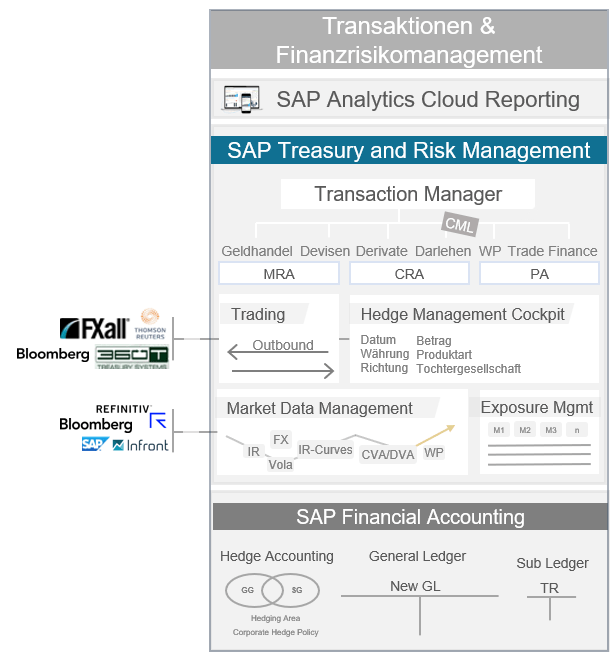
SAP Treasury and Risk Management (TRM) is one of SAP’s long-established Treasury modules. Over time, TRM has been continuously enhanced by SAP and now offers a comprehensive range of functionalities. Essentially, it covers the following functions:
- Financially sound mapping and management of all financial products tradeable with banks (incl. trade finance and commodities)
- Mirroring of intercompany loans between two group entities
- Mapping of trade finance transactions (bank guarantees and letters of credit) for several years
- Entry of complex fee and repayment structures
- Flexible configuration of entry screens (authorizations, mandatory/optional fields)
- Integration into other areas (FI, Cash Management, SD, SAP Business Partner) in proven SAP standard
- Audit-proof system (four-eyes principle, SAP authorization concept, release workflow, segregation of duties)
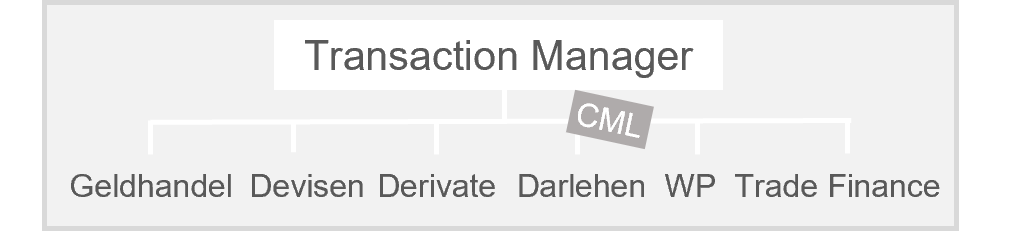
Transaction Manager for Transaction Management in TRM
Financial transactions are managed within the Transaction Manager – this includes the recording, adjustment, and reporting of executed financial transactions. SAP distinguishes between different types of financial transactions based on financial product categories, which are defined as follows:
In the Money Market within the SAP Transaction Manager, products such as fixed-term deposits, call money, notice deposits, and commercial papers are recorded and managed. The system supports the processing and valuation of these transactions and integrates seamlessly into the FI general ledger. It enables automated payment processing and interest calculation (and accrual/deferral) as well as the mapping of various accounting approaches. In addition, flexible adjustment options for contracts and detailed reporting are available, providing a transparent overview of all money market transactions.
In the Foreign Exchange area within the SAP Transaction Manager, spot transactions, forward transactions, FX swaps, and currency options are recorded and processed. The system enables the automated processing of exchange rates as well as the valuation and posting of transactions. It supports various accounting methods and offers the flexibility to adapt contracts. Integration into the general ledger ensures seamless posting of foreign exchange transactions, and detailed reporting functions are available to manage all foreign exchange positions transparently.
In the Derivatives area within the SAP Transaction Manager, various financial instruments such as interest rate and currency derivatives, swaps, options, and futures can be recorded and processed. In addition, complex and structured transactions consisting of multiple components can be mapped. The system enables the valuation of derivatives based on market data as well as automated posting according to various accounting standards. Integration into the general ledger ensures consistent bookkeeping. Risk management functions, such as collateral management, as well as comprehensive reporting options for monitoring derivative positions are also available.
In the Loans area (Consumer Mortgage Loans, CML) within the SAP Transaction Manager, consumer loans, mortgage loans, and other real estate financing are recorded and managed. The module supports the mapping of complex credit structures, including variable and fixed interest rates, as well as the automated generation of interest and repayment schedules. In addition, special repayments and early pay-offs can be flexibly integrated. Loans are posted directly to the general ledger, and comprehensive functions for accounting according to various standards are available. Reporting provides a detailed overview of loan portfolios, cash flows, and open receivables.
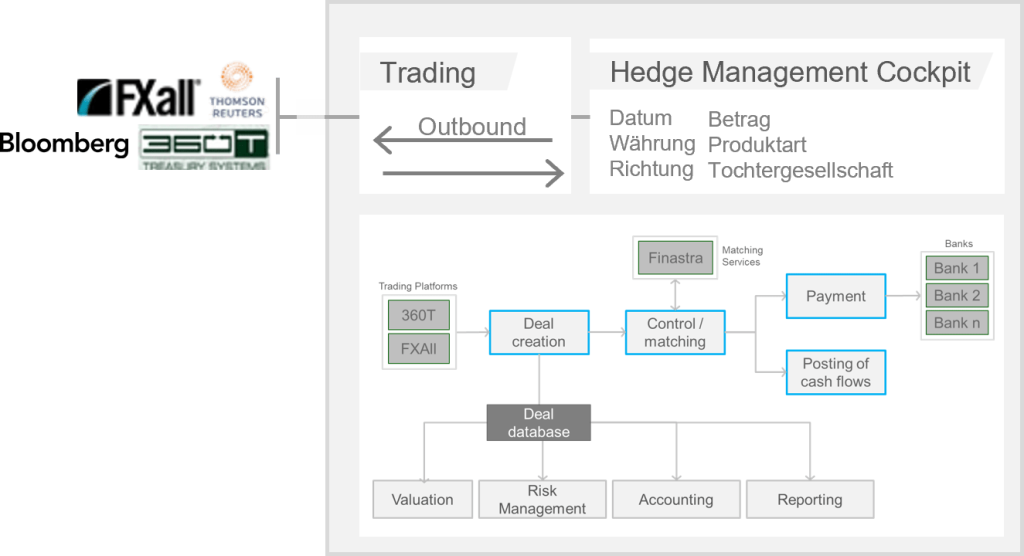
Trading and Hedge Management Cockpit
In the TRM Hedge Management Cockpit, target hedging ratios (hedge quotas)—such as “80% of USD exposure must be hedged”—can be defined. If the actual quota is lower, outbound trade requests can be generated automatically, which can then be traded automatically on 360T or comparable trading platforms. The subsequent process is also highly automatable. Once a trade is completed in 360T, the financial transaction is automatically created in the system. Subsequent process steps, such as transaction matching and payment processing, also occur automatically. Complementary processes such as valuation, risk management, accounting, and reporting ensure comprehensive control and transparency across all cash flows and hedging transactions.
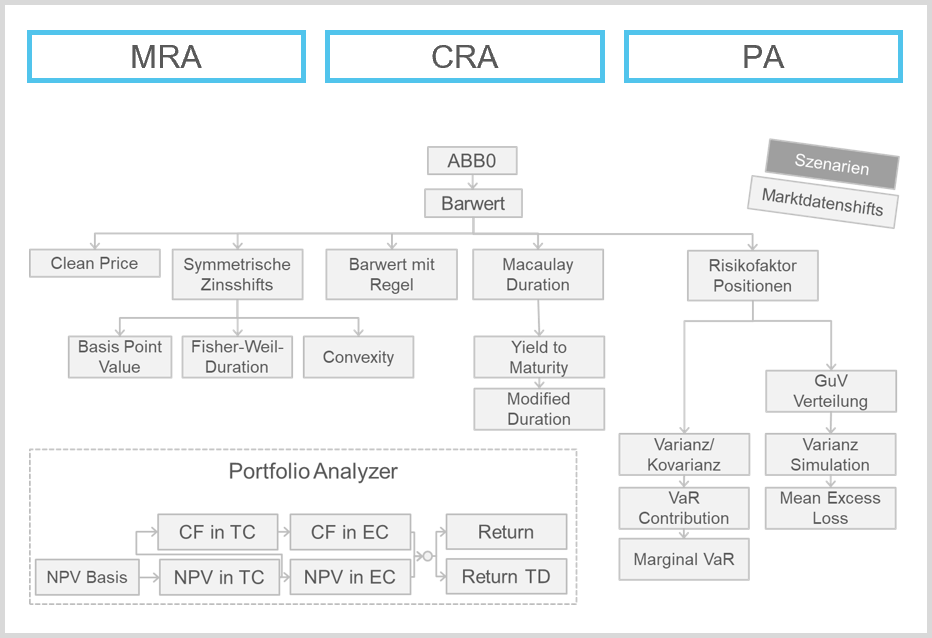
Risk Analyzer – Professionally Managing Risks from Financial Transactions
The Market Risk Analyzer (MRA) in SAP TRM provides comprehensive tools for capturing and evaluating market risks arising from changes in interest rates, exchange rates, commodity prices, or stock prices. The module enables sensitivity analyses to be performed, key metrics such as Value-at-Risk (VaR) to be calculated, and stress scenarios to be simulated. In addition, MRA supports the valuation of financial instruments based on current market data and helps to identify and manage potential risks at an early stage. The results flow directly into reporting to ensure a sound risk assessment.
The Credit Risk Analyzer (CRA) in SAP TRM enables the monitoring and evaluation of credit risks resulting from the creditworthiness of counterparties or business partners. The module provides functions for managing credit limits and monitoring default risks. Through the continuous check of credit exposures against defined limits, potential risks can be identified at an early stage. In addition, CRA supports the calculation of key metrics such as Expected Loss and Credit Value at Risk (CVaR) to quantitatively evaluate default risk. All results flow into detailed reports for risk management.
TRM – Interface to Accounting (SAP FI)
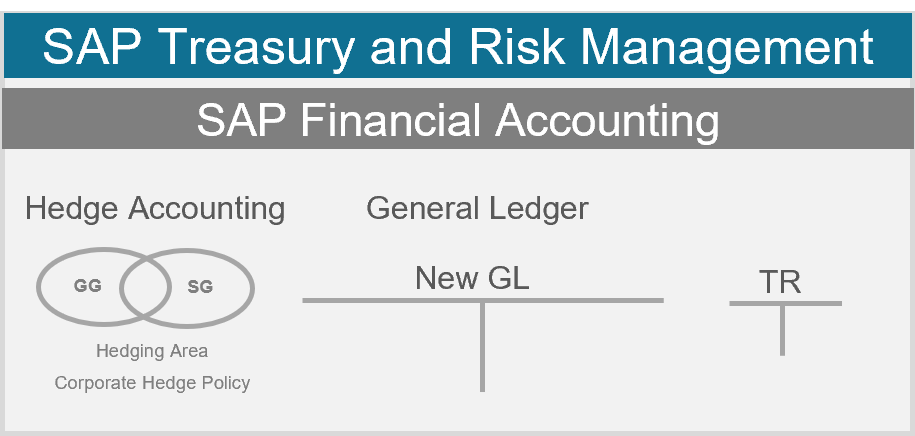
SAP Treasury and Risk Management (TRM) features an integrated accounting interface to SAP FI. This allows all financial transactions managed in SAP TRM to be posted fully automatically in SAP FI based on predefined account determination logic. This includes posting positions (such as loans or investments), adjustments for position changes, and position valuations (such as foreign currency or derivative positions). In addition, interest can be accrued on a daily basis, and payments can be executed via payment run accounts with the corresponding postings.n
A major advantage of this integration is that time consuming reconciliations between treasury and financial accounting are eliminated. In SAP FI, it is always clear which financial transaction is involved. Additionally, posting documents associated with a financial transaction can be accessed and viewed directly via drill down in TRM. SAP TRM supports ledger specific management of financial transactions (such as different treatment of financial transactions according to HGB and IFRS
Hedge Accounting with SAP TRM
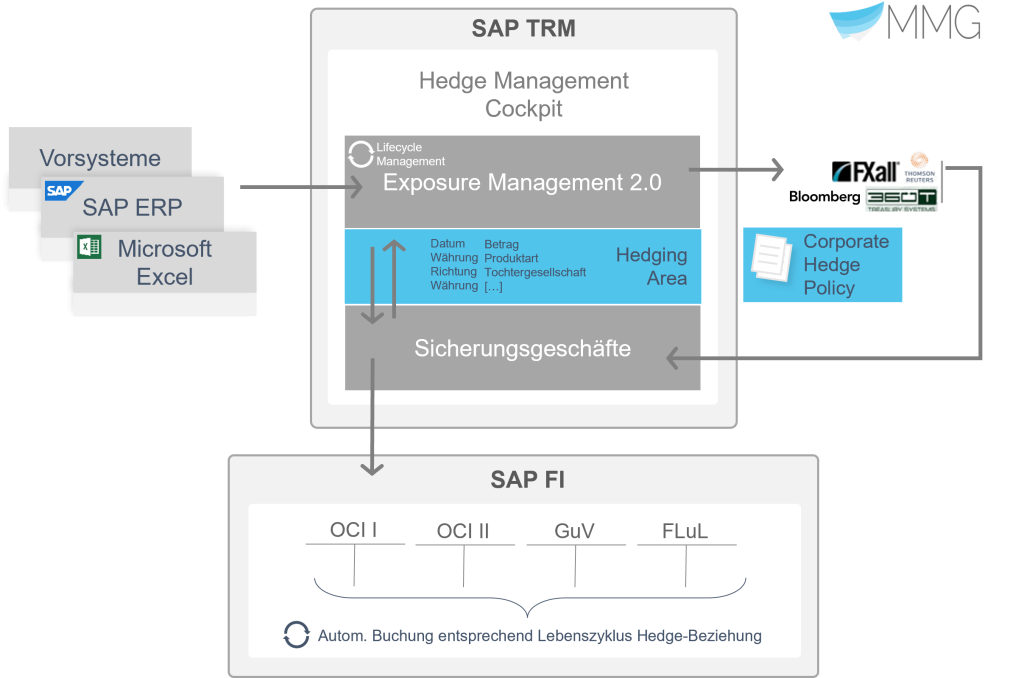
In Hedge Accounting within TRM, the proper valuation and posting of hedging transactions is the primary focus in order to depict financial risks and smooth out their fluctuations in the balance sheet. The key functions of TRM in this area are:
- Valuation of Hedging Transactions: The ongoing valuation of hedging transactions is carried out according to defined methods that support both fair value hedges and cash flow hedges. SAP TRM performs these valuations automatically and periodically, separating hedged and non hedged components.
- Effectiveness Tests: To comply with accounting standards, effectiveness tests are conducted regularly to ensure that the hedging relationship remains effective. This is done by checking whether changes in the value of the hedging instrument sufficiently compensate for fluctuations in the underlying transaction. In case of deviations, necessary adjustments are made automatically.
- Component Splitting: SAP TRM enables the splitting of hedging transactions into various components (such as spot, forward, CCBS), allowing for detailed and precise accounting. This division is necessary to accurately reflect the valuation of individual elements.
- Automatic Posting in SAP FI: The postings for hedging transactions occur automatically in SAP FI based on the results of the effectiveness tests and valuation. Postings are transferred to relevant accounts such as OCI (Other Comprehensive Income) or directly to P&L (Profit and Loss), depending on the type of hedge (fair value or cash flow).
- Lifecycle Management: SAP TRM supports the entire lifecycle of a hedging transaction, from initial designation and ongoing valuation through to the final derecognition of the hedging relationship. Changes during the lifecycle, such as the retirement of an underlying transaction or adjustments to the hedge volume, are automatically taken into account and reflected in the corresponding postings.
SAP TRM ensures that hedging transactions are correctly valued, their effectiveness is tested, and the corresponding postings are automatically carried out in SAP FI. This enables end to end traceability and meets requirements under both IFRS and HGB without requiring extensive manual reconciliations between treasury and financial accounting.
Contact us. We're here to help.
One of our experts will contact you shortly